
A carrier-neutral data center is one that allows customers to connect to any network provider present in the building, rather than tying them to the facility owner's own network or a single preferred carrier. It sounds like a technical detail. For customers, it is one of the most important commercial terms in the relationship.
The idea is not new, and some buyers assume it no longer needs saying. It does. Cloud adoption, distributed applications and the growth of data-heavy workloads have made the network around a data center at least as important as the power and cooling inside it. A building that limits a customer's network choices limits everything that runs inside it.
What neutrality means, and what it does not
Neutrality is a set of commitments, not a sticker. In a neutral facility, the owner does not sell connectivity in competition with the carriers in its building, or if it does, it gives every carrier equal access to customers on equal terms. Carriers can bring their networks into the building, customers can buy from whichever carriers they choose, and the owner earns its revenue from space, power, cooling and interconnection services rather than from steering traffic.
Neutrality does not mean every carrier is present. A building may be neutral in policy and still have only a small number of networks on site, particularly when it is new. What matters is whether the door is open, whether the terms are fair and whether the physical infrastructure lets new carriers come in without unreasonable cost or delay.
Choice is resilience
When several carriers serve a building over diverse fiber routes, a customer can buy connectivity from more than one of them. If one network has an outage or a fiber cut, traffic can move to another. A facility with a single carrier, or a single physical entry point for fiber, cannot offer that protection. A single carrier is a single point of failure outside the walls, however well the inside is engineered.
A single carrier is a single point of failure outside the walls, however well the inside is engineered.
Diversity has to be physical, not just commercial. Two carriers that share the same conduit down the same street will fail together when a backhoe hits that conduit. Real diversity means separate building entry points, separate routes away from the building and, ideally, separate paths all the way to the networks the customer depends on. Buyers should ask for route maps, not just a list of carrier names.
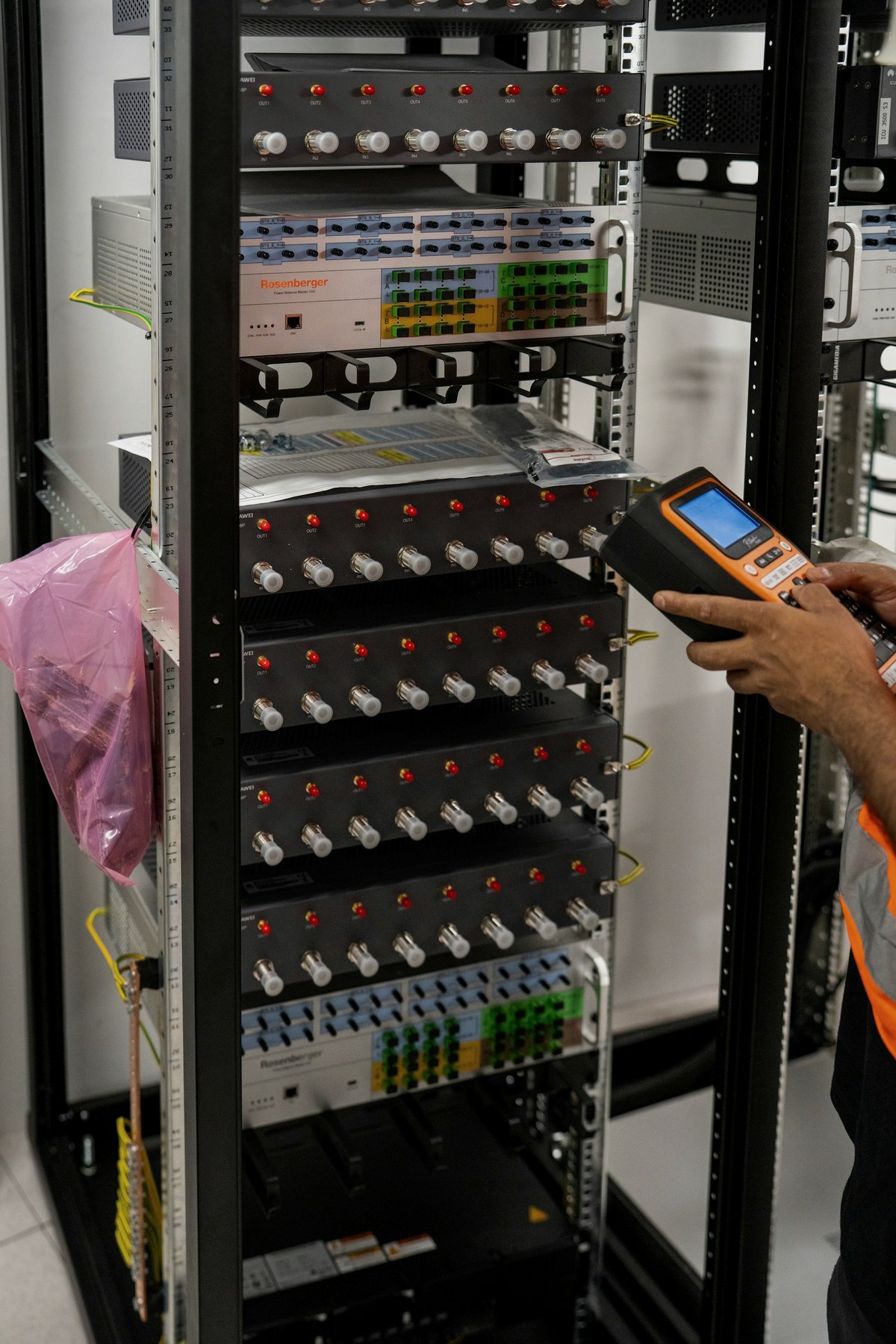
Inside the building, the same principle applies. Meet-me rooms, where carriers hand off to customers, should be designed so that the loss of one room or one pathway does not cut every connection at once. Redundant meet-me rooms with diverse pathways to the data halls are the network equivalent of the redundant power paths described in any serious design standard.
Resilience also depends on how the customer uses that choice. Buying from two carriers only helps if the customer's own equipment and routing are set up to use both paths, and if failover has been tested. A neutral building makes that architecture possible. The customer still has to build it, and a good operator will help them plan it.
Choice keeps pricing honest
Competition among carriers inside a facility gives customers leverage on price and terms. It also makes it easier to change providers as needs evolve, without the cost and risk of moving equipment to a new building. For long-lived infrastructure, that flexibility has real value over the life of a contract.
Consider a hypothetical enterprise that signs a long-term colocation agreement in a building served by a single carrier. In the first year, the connectivity price looks reasonable. By the time the network contract comes up for renewal, the customer's equipment is installed, its applications are tuned to the site and moving would take months of work and real risk. The carrier knows all of this. In a neutral building with several carriers, the same customer can request competing quotes and switch with a cross-connect change. That option is worth something every year, whether or not it is exercised.
Cross-connects deserve particular attention. A cross-connect is the physical cable that links a customer's equipment to a carrier, a cloud on-ramp or another tenant in the same building. Customers often order many of them over the life of a contract, and recurring cross-connect charges can become a meaningful line item. Published, consistent pricing that applies the same way to every carrier is one of the clearest signs that a building's neutrality is real.
Choice builds an ecosystem
Neutral facilities tend to attract a mix of tenants: enterprises, cloud on-ramps, content networks, carriers and service providers. Each new participant makes the building more useful to the next, because more connections can be made with a short cross-connect rather than a long-haul circuit. That density is what turns a building into an interconnection point.
For a customer, that ecosystem changes what is possible. A direct connection to a cloud provider's on-ramp in the same building can offer more predictable performance than reaching the same provider over the public internet. Partners, suppliers and service providers in the same facility can be connected privately with a cross-connect. Over time, the building becomes part of the customer's network architecture rather than just a place to keep servers.
The ecosystem effect builds slowly and compounds. A new neutral facility may open with a modest number of networks. As enterprises and service providers move in, carriers have more reason to extend their networks into the building, which in turn attracts more tenants. The operator's role is to keep the conditions right for that cycle: fair access, enough pathway and meet-me room capacity for growth, and a process that makes it easy for a new carrier to come in.
Government and public-sector customers often add their own requirements. Some need specific carriers that hold particular contracts or authorizations, and some need connections that are physically separate from other tenants' traffic. A neutral facility with room for additional carriers and well-planned pathways can accommodate those needs. A single-carrier building may simply be unable to.
Why it matters more now
Several trends have raised the stakes. Many organizations now run applications across their own facilities and more than one cloud provider, and they need fast, private links among all of them. Data-heavy workloads, including analytics and AI, move large volumes between storage, compute and users, which makes network cost and performance a larger share of the total. And customers increasingly treat resilience as a property of the whole system, which puts the network paths outside the building under the same scrutiny as the power paths inside it.
Each of those trends rewards a building that offers many network options and penalizes one that offers few. A facility chosen today will host workloads that do not exist yet, connected to networks that may not be in the building yet. Neutrality is how a customer keeps those options open.
Common mistakes
Buyers who end up dissatisfied with their network options rarely chose a bad building on purpose. More often, they focused on space, power and price per kilowatt, and treated connectivity as a detail to sort out after signing. By then, their leverage was gone. The usual missteps include:
- Accepting a list of carrier names as proof of route diversity, without checking where the fiber actually runs.
- Overlooking cross-connect pricing and terms, which can add up to a meaningful share of total cost over a long contract.
- Assuming neutrality in policy means neutrality in practice, without asking how new carriers are brought in.
- Planning the network after signing for space and power, when the network options should shape the site choice.
What to ask a provider
- How many carriers are on net today, and how many have signed agreements to come in?
- How many diverse fiber entry points does the building have, and where do they route?
- Are cross-connect fees published, and do they apply equally to every carrier?
- Can the customer bring a carrier that is not yet present, and on what terms?
- How many meet-me rooms are there, and what happens to connectivity if one is lost?
Good providers welcome these questions. They are, in effect, asking whether the building will serve the customer's interests over a contract term measured in years, and a neutral operator should be able to answer each one with documents rather than assurances.
How Keystone approaches it
Carrier neutrality is a core design principle for UpManagement Keystone facilities, alongside power and cooling redundancy. The building should serve the customer's network strategy, not dictate it.
In practice, that principle shows up early. Fiber entry points, conduit routes and meet-me rooms are planned as part of site selection and design, alongside the power path, so that diversity is built into the building rather than added later. Because Keystone also operates its facilities, it is accountable for keeping access fair and terms consistent for every carrier and every customer over the life of the building. Cloud providers, enterprises and public-sector customers each have different network needs. A neutral building lets each of them meet those needs on their own terms.
Published by UpManagement. This article is general information about the sectors in which the UpManagement companies operate. It is not legal, tax, investment or compliance advice, and it is not an offer to sell or a solicitation of an offer to buy any security. Where a company is described as a platform in formation, its approvals are not yet in place.